
How to Understand Interest Rates and Why They Move Markets
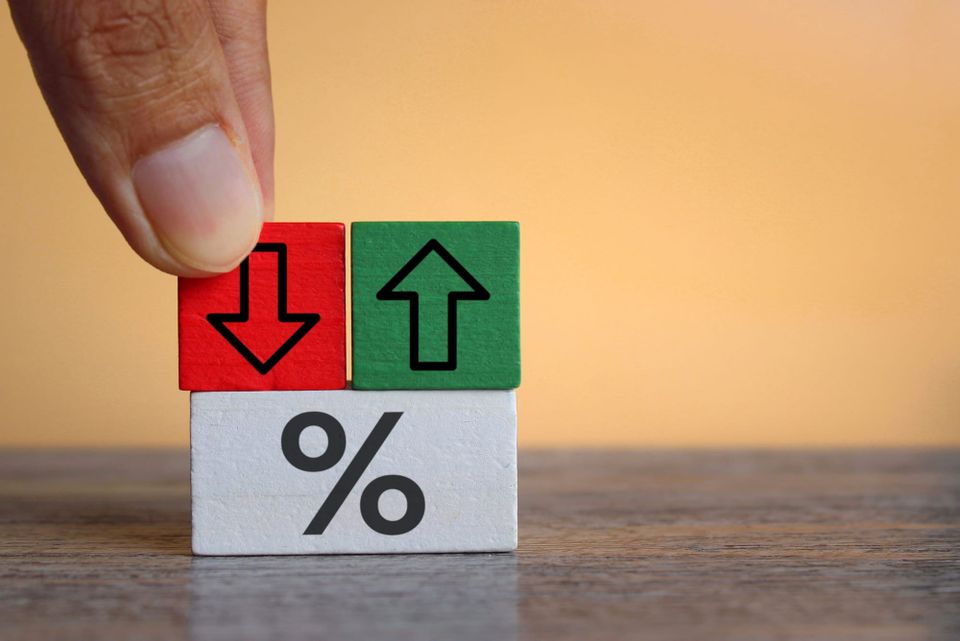
Interest rates influence nearly every part of the financial system. They affect mortgage payments, credit card costs, business borrowing, stock valuations, bond prices, and even the returns on your savings account.
Yet many investors hear that "rates went up" or "rates went down" without understanding why markets react so strongly. The reason is simple: interest rates determine the cost of money. When that cost changes, the value of assets across the economy changes as well.
What Interest Rates Actually Represent
At their core, interest rates are the price of borrowing money.
When you take out a mortgage, buy a car with a loan, or use a credit card, you're paying interest to access money today rather than later.
The same principle applies to businesses and governments. Companies borrow to expand operations, build factories, hire employees, and invest in growth. Governments borrow to fund spending and infrastructure projects.
When interest rates rise, borrowing becomes more expensive. When rates fall, borrowing becomes cheaper.
That simple relationship helps explain why interest rates have such a powerful impact on economic activity.
Why Central Banks Change Interest Rates
In the United States, the Federal Reserve adjusts short-term interest rates primarily to manage inflation and support economic stability.
When inflation becomes too high, the Fed often raises rates to slow spending and borrowing. Higher rates make loans more expensive, which can reduce demand across the economy.
When economic growth weakens, the Fed may lower rates to encourage borrowing, investment, and consumer spending.
This balancing act is one of the most important forces driving financial markets.
Investors closely monitor inflation reports, employment data, and economic growth because these indicators influence future interest rate decisions.
Why Higher Rates Often Pressure Stocks
Stock prices are based on expectations about future profits.
When interest rates rise, those future profits become less valuable in today's dollars. Investors call this the discounting effect.
Higher rates can also hurt companies directly by:
- Increasing borrowing costs
- Reducing consumer spending
- Slowing business investment
- Lowering profit margins
Growth stocks are often affected the most because much of their value comes from profits expected years into the future.
That's why technology and high-growth sectors frequently struggle during aggressive rate-hiking cycles.
However, rising rates do not automatically mean stocks will fall. Strong economic growth can sometimes offset the negative effects of higher borrowing costs.
Why Bond Prices Move Opposite Interest Rates
One of the most important concepts in investing is the inverse relationship between bonds and interest rates.
When rates rise, existing bonds become less attractive because newer bonds offer higher yields.
As a result, the market value of older bonds falls.
For example, imagine you own a bond paying 3% interest. If newly issued bonds suddenly pay 5%, investors will be less willing to pay full price for your lower-yielding bond.
The opposite occurs when rates decline. Older bonds with higher yields become more attractive, pushing their prices upward.
This relationship explains why bond investors pay close attention to interest rate expectations.
How Interest Rates Affect Everyday Consumers
Interest rate changes aren't just a Wall Street issue.
They can influence:
- Mortgage rates
- Auto loan payments
- Credit card interest charges
- Savings account yields
- Certificate of deposit (CD) rates
- Business loan costs
When rates rise, borrowers generally pay more. Savers, however, often benefit from higher yields on cash and fixed-income investments.
This creates an important trade-off. What hurts borrowers can help savers.
That's one reason why different groups may react very differently to the same interest rate decision.
Why Markets React Before Rates Actually Change
A common misconception is that markets move only after a central bank announces a rate change.
In reality, markets are forward-looking.
Stock and bond prices constantly reflect investor expectations about future interest rates.
If investors believe the Fed will begin cutting rates next year, markets may start adjusting months before the first rate cut occurs.
Likewise, if inflation unexpectedly rises, stocks and bonds can react immediately because investors anticipate tighter monetary policy ahead.
This is why economic forecasts and central bank comments often move markets even when no policy change has occurred.
What Investors Should Focus On
Many investors make the mistake of trying to predict every rate move.
A more useful approach is understanding how different assets respond to changing rate environments.
Generally:
- Higher rates tend to benefit savings accounts and newly issued bonds.
- Higher rates can create challenges for heavily indebted companies.
- Lower rates often support borrowing, spending, and economic growth.
- Long-duration growth stocks are typically more sensitive to rate changes than mature businesses with stable cash flow.
Rather than reacting emotionally to every headline, focus on maintaining a diversified portfolio that can perform across different economic conditions.
Interest rates matter, but successful investing rarely depends on perfectly predicting where they will go next.
Conclusion
Interest rates are one of the most powerful forces in financial markets because they influence the cost of borrowing, the value of future profits, consumer spending, and economic growth. When rates rise, borrowing becomes more expensive and certain assets may face pressure. When rates fall, spending and investment often receive a boost. Understanding these relationships helps investors make better decisions and avoid being surprised when markets react strongly to changes in monetary policy.
Victoria Bell